Wang Xiaobo
Introduction
Wang Xiaobo was a celebrated Chinese author whose influence remains significant in Chinese literature even decades after his death. Born in Beijing in 1952, Wang Xiaobo experienced the socio-political upheavals of the "cultural revolution" from 1966 to 1976, which significantly impacted his life and writing. During this period, he was sent to the countryside of Yunnan province to work as a farmer, an experience that inspired much of his later literary works. Wang began writing during these years, drawing deeply from his rural experiences to create vivid, evocative settings for his stories.
Early Life and Education
Wang Xiaobo was born into a time of great change in China. His early life was marked by the "cultural revolution" (1966-76), during which he was sent to Yunnan province. In 1971, he was moved to Shandong province, where he worked as a teacher. This role offered him a degree of stability and allowed him to continue his education informally. Two years after the "cultural revolution" ended, Wang took the national college entrance exam and was accepted into Renmin University of China in Beijing. This marked the beginning of his formal higher education, which would later expand to include studies in the United States.
Academic Pursuits
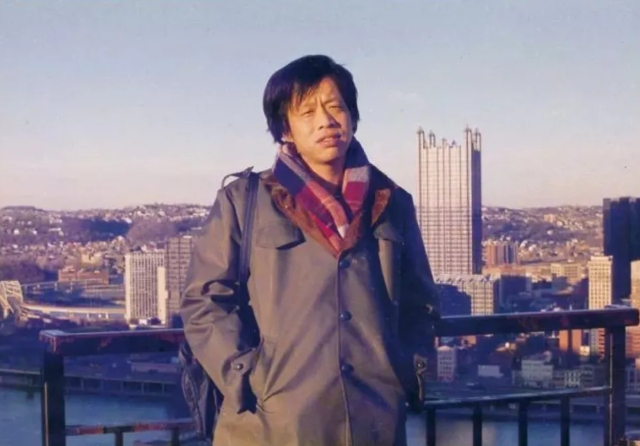
In 1980, Wang Xiaobo married Li Yinhe, a renowned sociologist and scholar. The couple's academic pursuits took them to the United States, where Wang studied East Asian Studies at the University of Pittsburgh. This experience broadened Wang's intellectual horizons and exposed him to Western literature and philosophy, influences that would permeate his writing. Upon returning to China in 1988, Wang took up teaching positions at Peking University and Renmin University. However, his passion for writing soon led him to leave academia and pursue a full-time career as a freelance writer in 1992.
Literary Career
Wang Xiaobo's literary career flourished in the 1990s, a period marked by a burgeoning interest in Chinese literature both domestically and internationally. His works, which include novels and essays, are renowned for their humor, irony, and social critique. Notable among his works are The Golden Age and Love in the Time of Revolution, which captivated readers with their innovative narratives and profound insights into Chinese society. Wang's style is characterized by a blend of satire and philosophical reflection, often addressing themes of freedom and individuality against the backdrop of China's historical and cultural transformations.
Legacy and Influence
Wang Xiaobo's influence extends beyond his literary output; his works have become an integral part of contemporary Chinese literature. Despite his untimely death in 1997, his writings continue to resonate with readers and critics alike. His wife, Li Yinhe, has played a crucial role in preserving and promoting his legacy, ensuring that Wang's insights and narratives remain accessible to new generations. A collection of his works, including some previously unpublished manuscripts, was released by Beijing October Culture and Arts Publishing House, further cementing his status as a literary icon.
Cultural Impact
Wang's works have been translated into several languages, broadening their impact beyond China. His novella collection, Wang in Love and Bondage, is available in English, and his novel The Golden Age has been translated into French, Japanese, and Korean. These translations have introduced Wang's unique voice and perspective to a global audience, allowing international readers to engage with his exploration of universal themes such as love, freedom, and the human condition.
In addition to his novels, Wang Xiaobo's essay collections, such as The Silent Majority and An Idiosyncratic Pig, delve into art and social issues, advocating for critical thinking and intellectual freedom. His works continue to inspire discussions about the role of the individual in society and the power of literature to challenge and change perceptions.








